
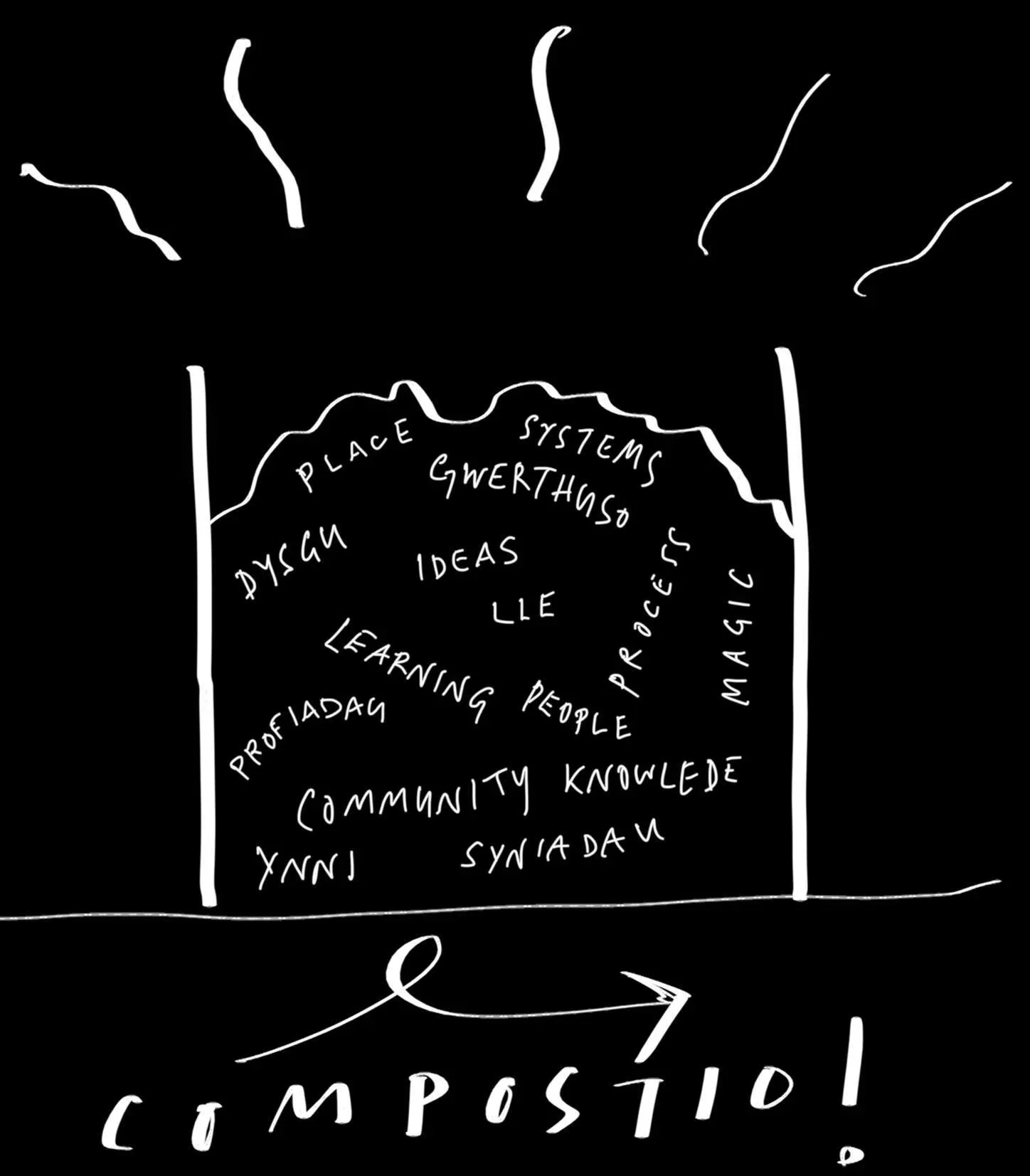
We are using the analogy of the garden and of composting in our work to explore a systems thinking approach to place. What if we imagined the work of democratised change, where lived experience sat alongside community empowerment through a lens of permaculture? Our context is Carmarthen town, our collaborators are our partnership network, our local citizens assembly and coordination group.
Throughout this process we have been working with three facilitators alongside Owen as the Collaboration and Change lead for Carmarthen. They are Ali Franks, Jen Parkin and Lisa Clarke.
COMPOSTÏO
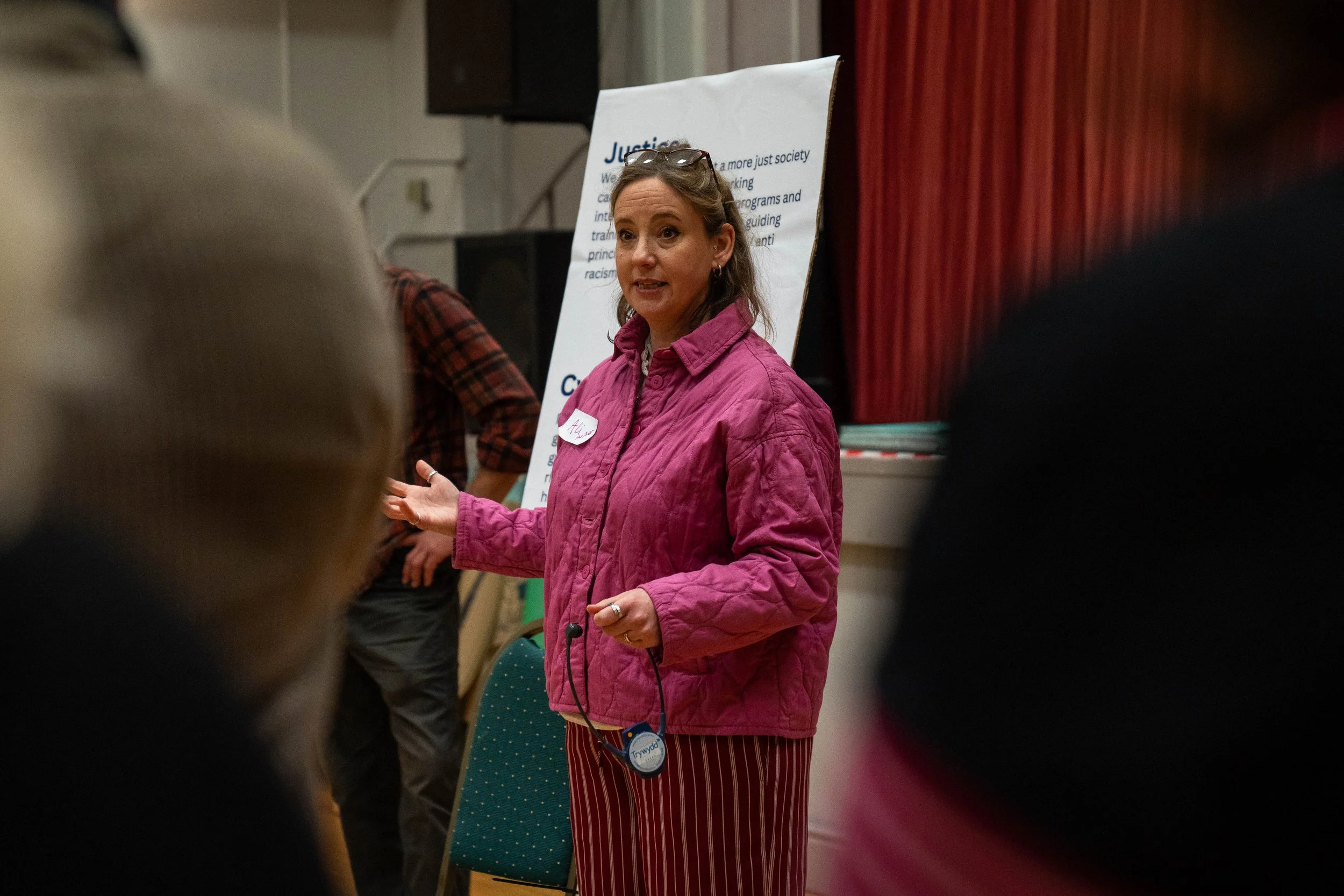
Ali is a conscious facilitator, creative educator, applied theatre practitioner and coach with over 25 years of experience working with individuals, leaders and groups in art, wellbeing, education and social justice settings.
Ali trained with Sir Ken Robinson at Warwick University where she developed a passion for creativity, the arts and education. Following on from 15 years in community arts and education as an applied theater practitioner, Ali spent 10 years leading on the BA Applied Drama and MA Applied Theatre program’s at University of Wales Trinity Saint David, where she specified in teaching critical facilitation. Ali left the university in August 2025 to focus on developing her own practice as a conscious coach, creative facilitator and education at The Reconnection Coach.
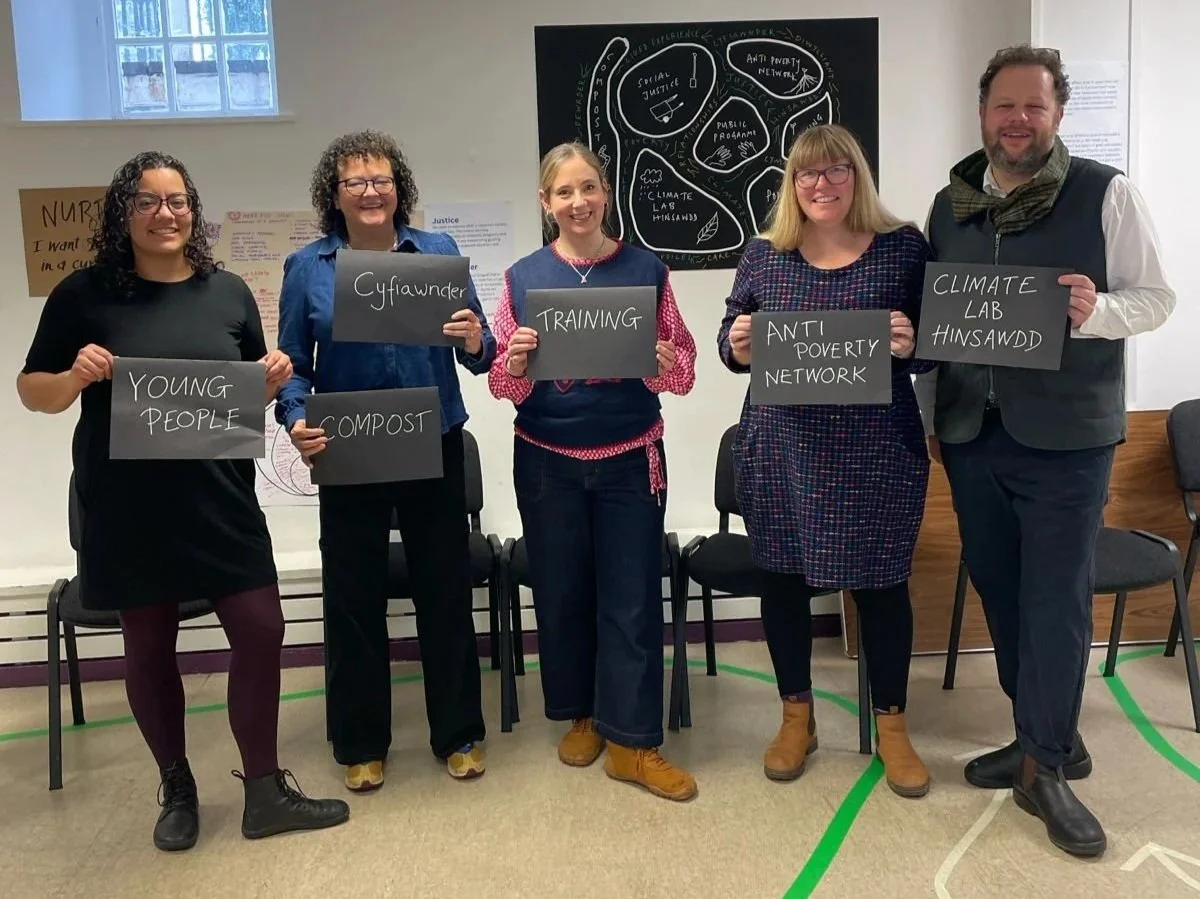
Ali currently works alongside LocalMotion as a facilitator with the Citizens Assembyl and the Access and Dis-Ability Working Group.
Ali Franks
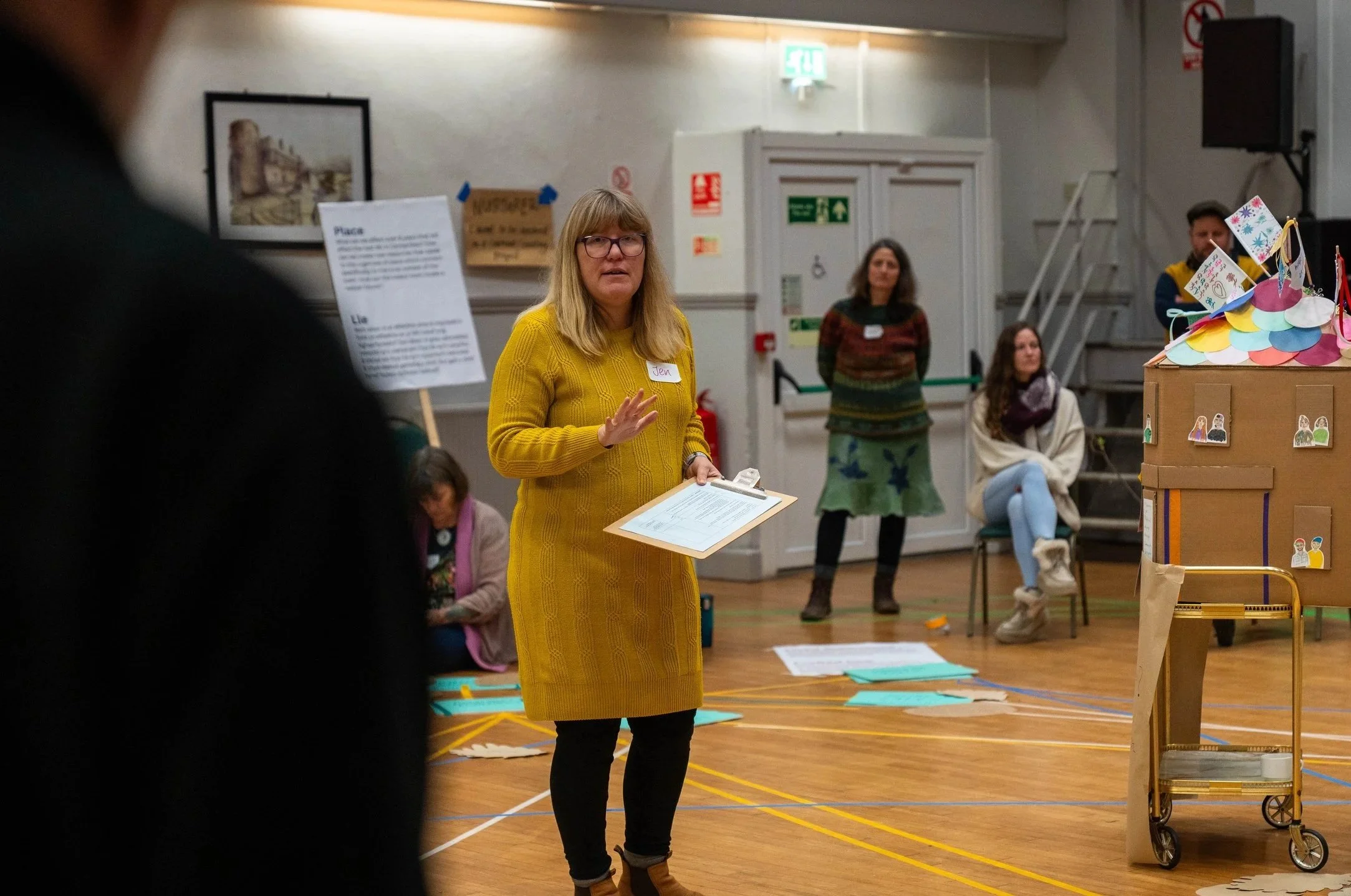
Jen is a systems thinking expert and applies this knowledge using facilitation and team coaching skills. She helps places, organizations and individuals to reveal what’s going on holistically; understanding systemic issues in more depth and how to act on them. One of Jens Core beliefs is to work transparently in order to build capability in system change. Over the last 20 years, she has primary worked within: Local Government, Central Government, NHS, Police, Voluntary and Community Sector (VCS) and charitable foundations.
Jen Parklin
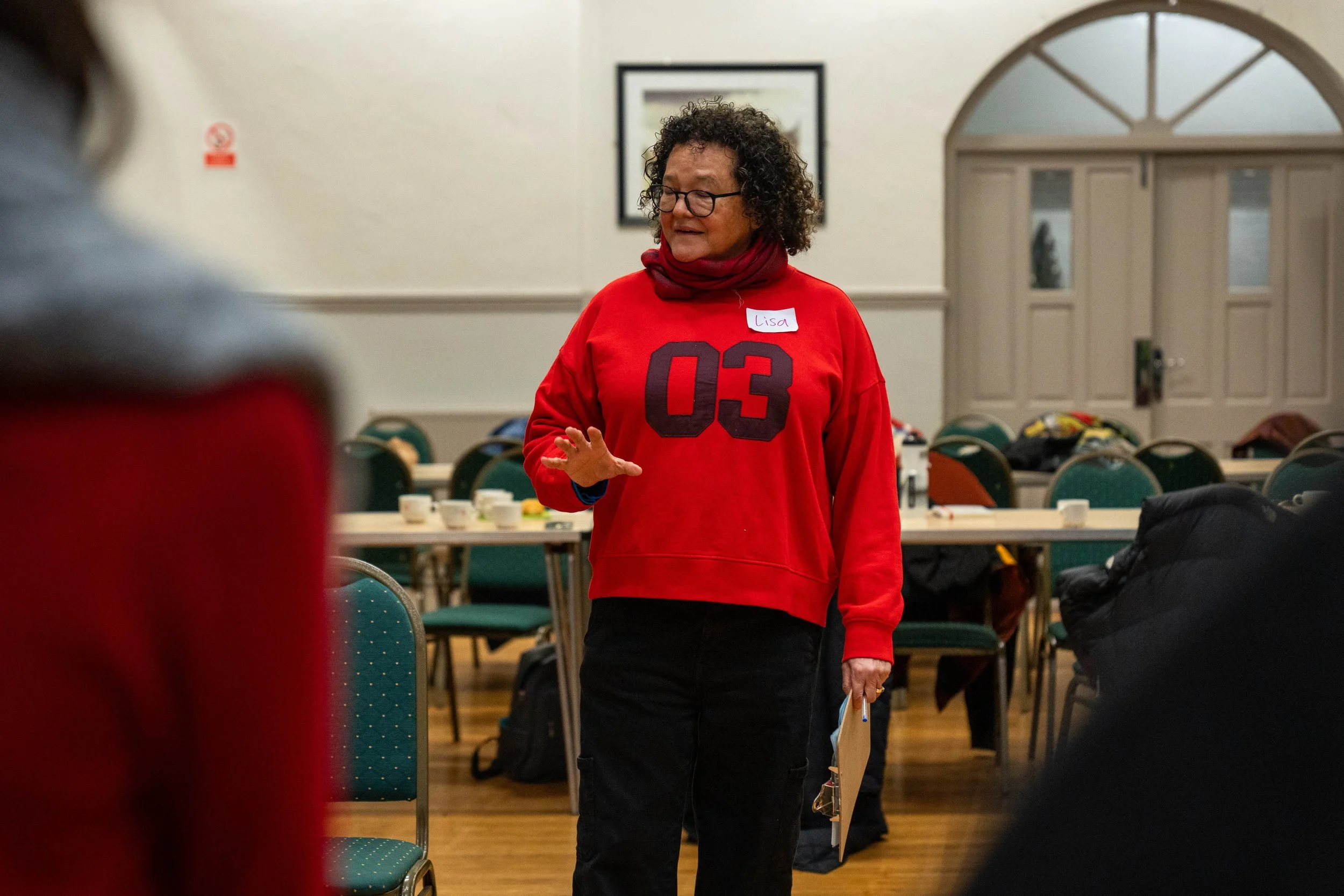
Lisa is a Partner at PG Collective, working with individual and organizations to design and facilitate systemic change, care, belonging and ecological connection. She is a regenerative leader, facilitator and coach specializing in place-based systems change, governance and collaborative leadership.
Her work focuses on creating brave, relational spaces that challenge traditional power dynamics and support innovative approaches to governance and leadership. Lisa has led complex, cross-sector change across the voluntary and community sector, foundations, local government, the NHS and education, with a strong focus on addressing structural inequality.
She brings a deep commitment to learning from lived experience and embodied practice with training in somatic coaching, organizational relationship systems coaching (ORDC), deep democracy and group relations.
Lisa is motivated by work that builds more just, resilient and sustainable, socially, relationally and ecologically.
Lisa Clarke
COMPOSTÏO Session 1
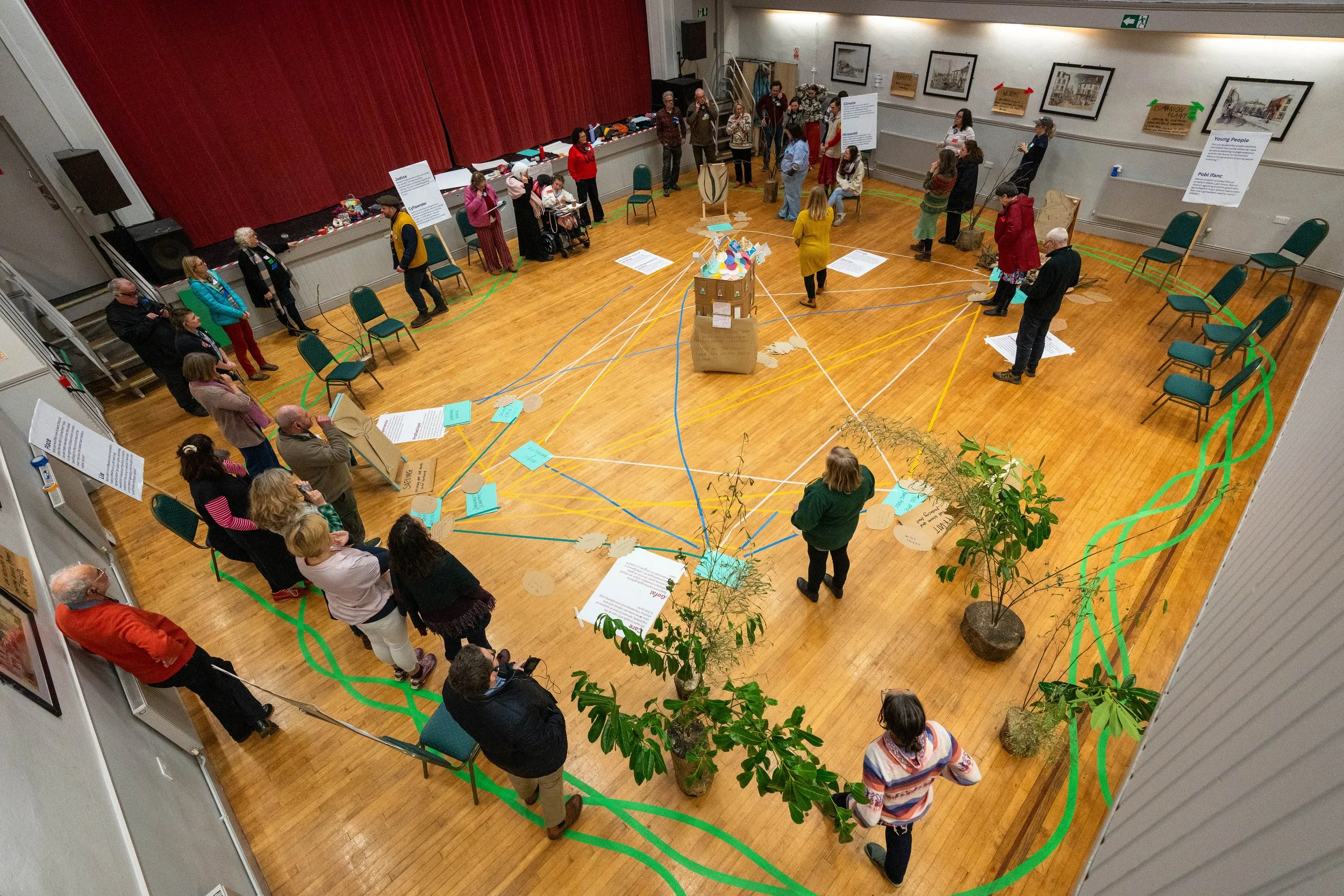
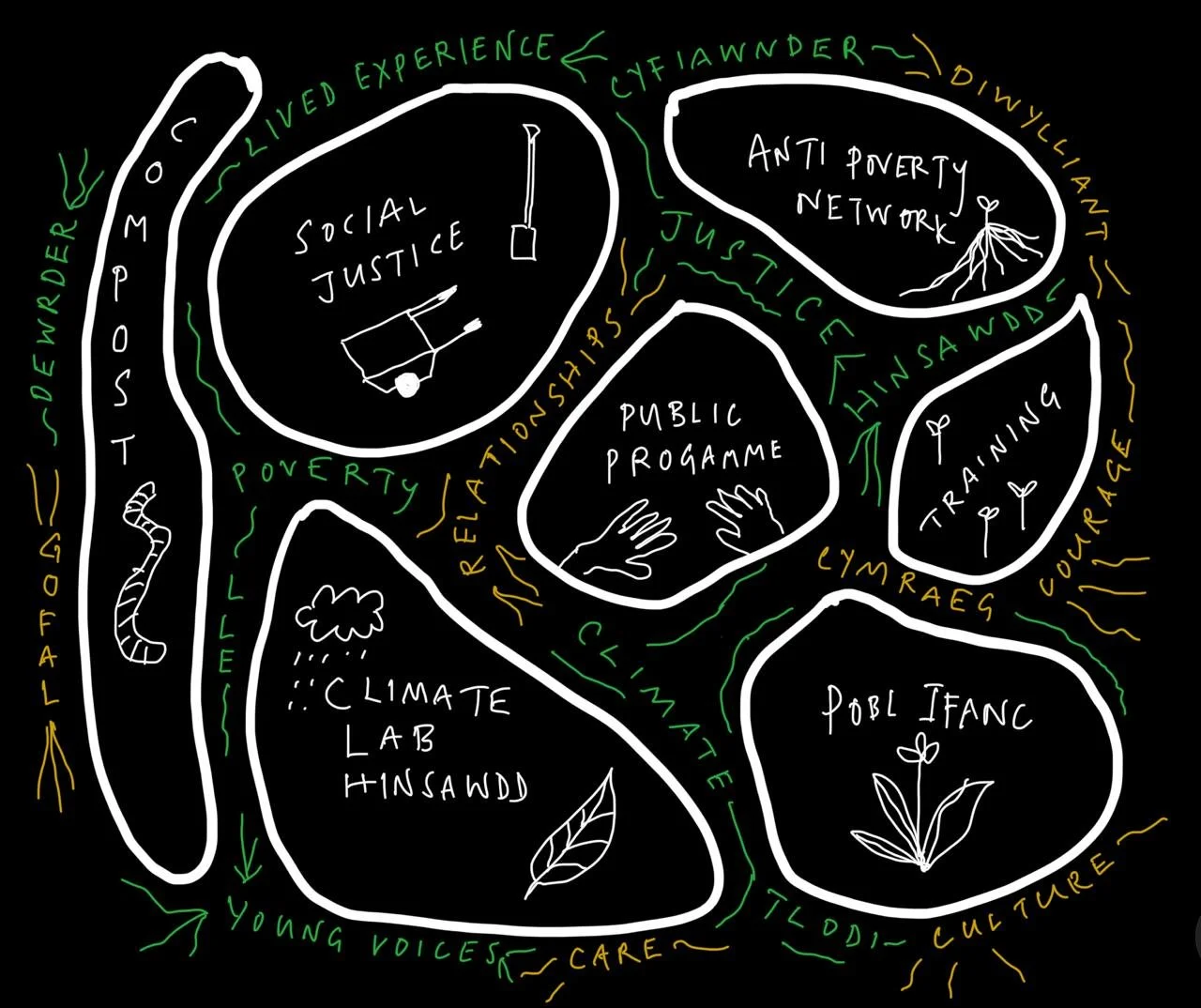
For this first session we created a large-scale immersive garden in St Peters Hall. A theatre set if you like, for the work of change. Around the outside of the garden were our values and themes and within the zone of the garden there were the following areas to work within and from.
A forest where things flourished and grew strong.
A compost heap where we enriched the soil with our learning, failure and stories.
A shed, where resources and tools came from
A seed bed for new ideas to be planted
A sapling for ideas and projects that needed support but were beginning to flourish.
To enable people to embody their roles and see themselves as part of the garden we asked them to identify as one of the following roles.
Pollinator – someone who moves from project-to-project cross pollinating enabling action, communication and creativity. You may not want to be tied to one place.
Worm – A processor deep in the system, enriching the environment and creating a good basis and foundation for all to flourish, digesting information.
Companion Plant – You are offering support with the ecosystem, enabling new growth and protection and you are working in dialogue with mentoring or care giving.
Planter – You initiate and establish and idea, you lead with the structure
Nurturer – Looking after either the whole ecosystem or specific themes. You may have expertise or experience in this area to help create resilience and support
COMPOSTÏO Session 2
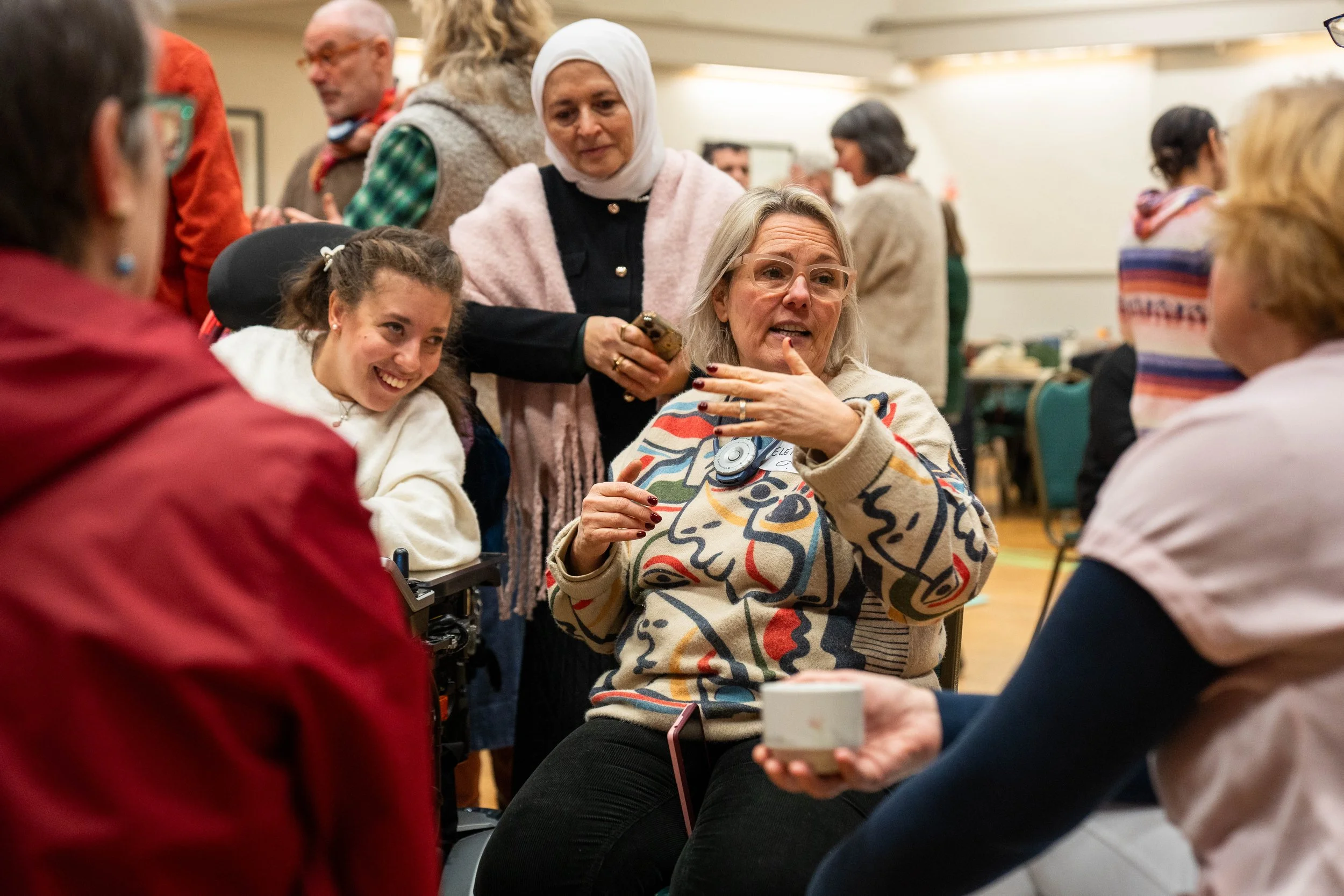
We gathered in the meeting room in Carmarthen library where participants could join one of three sessions over two days. Sessions were held at different times of the day to suit different care or work patterns to enable people to access the event and for all contributions to be heard.
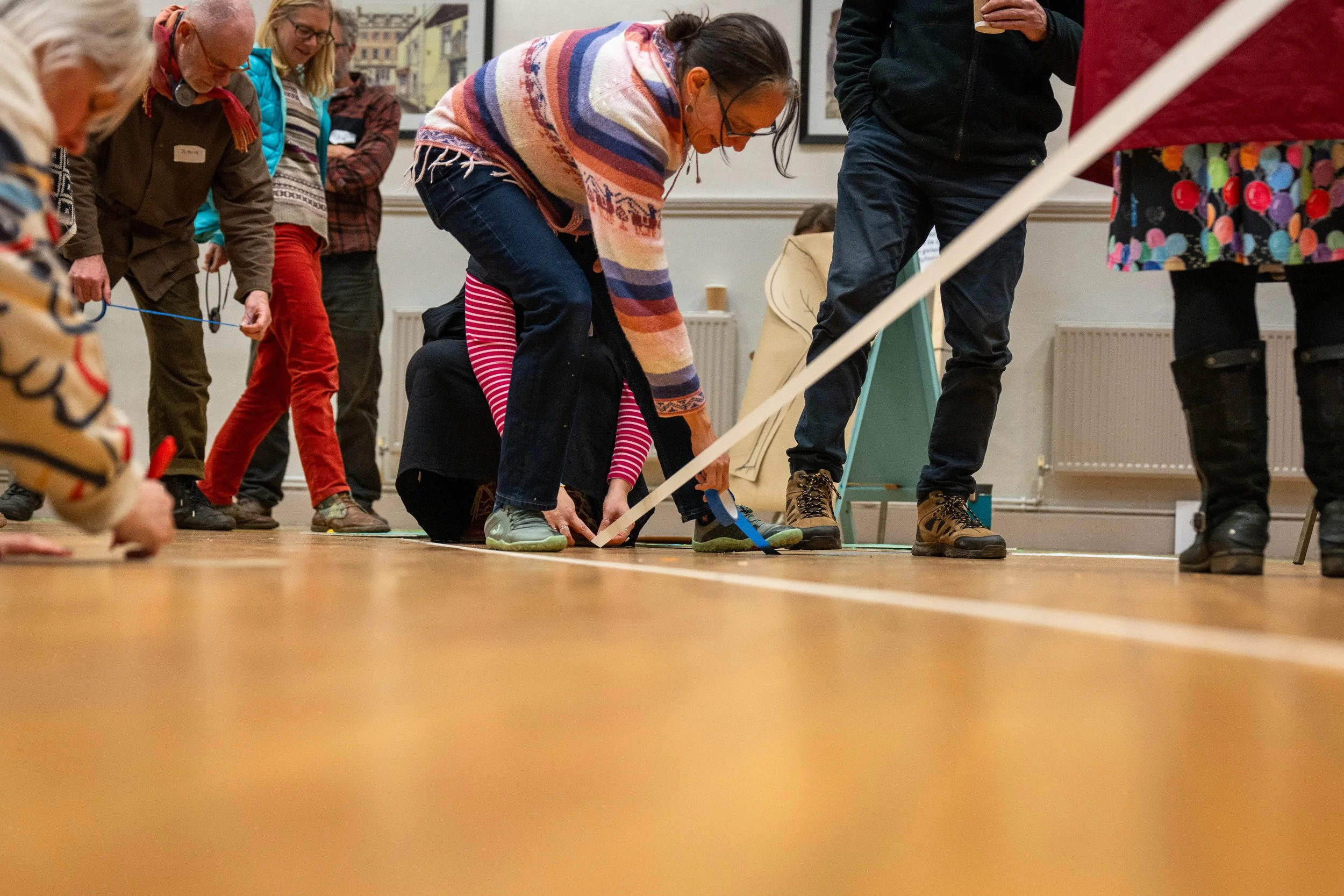
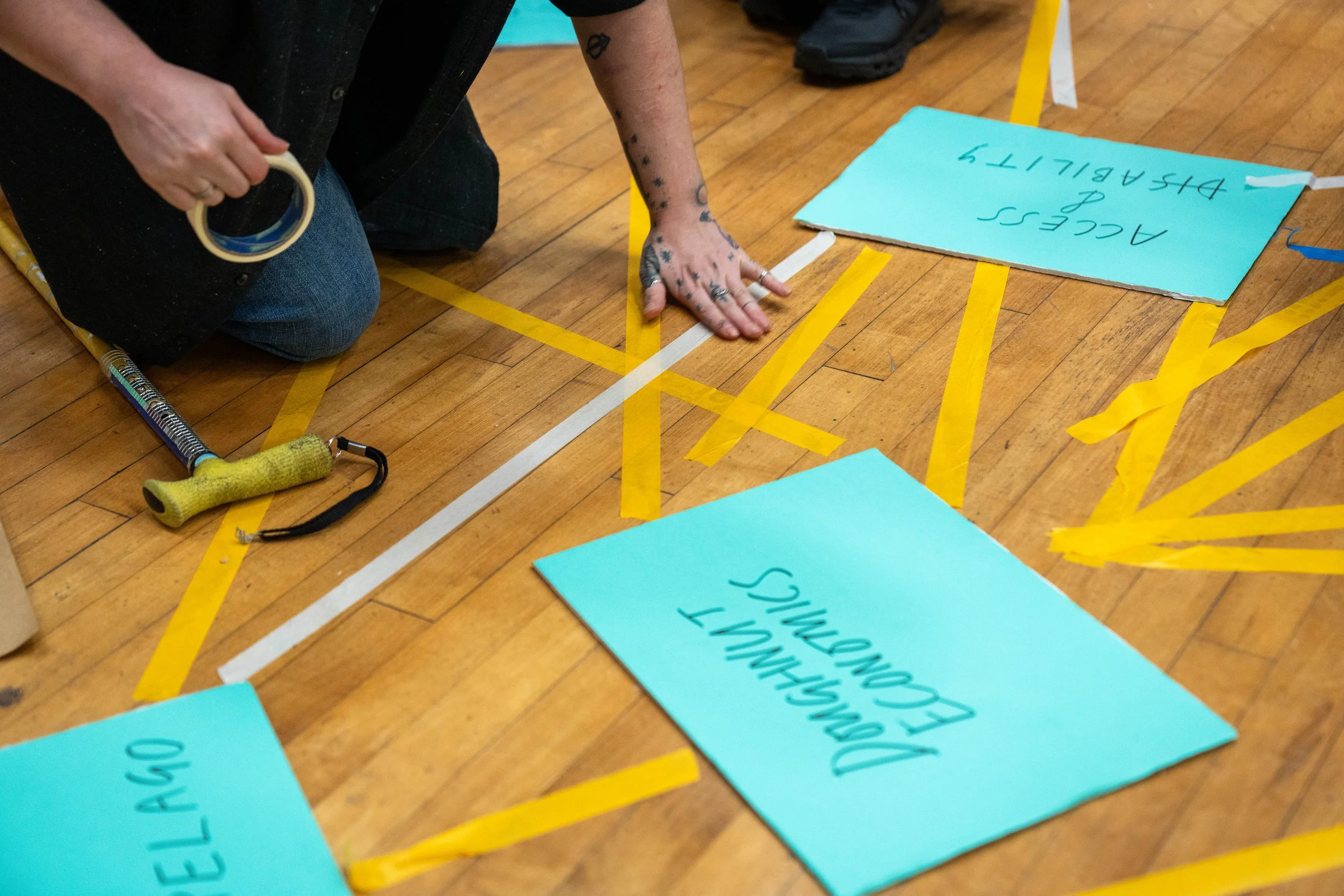
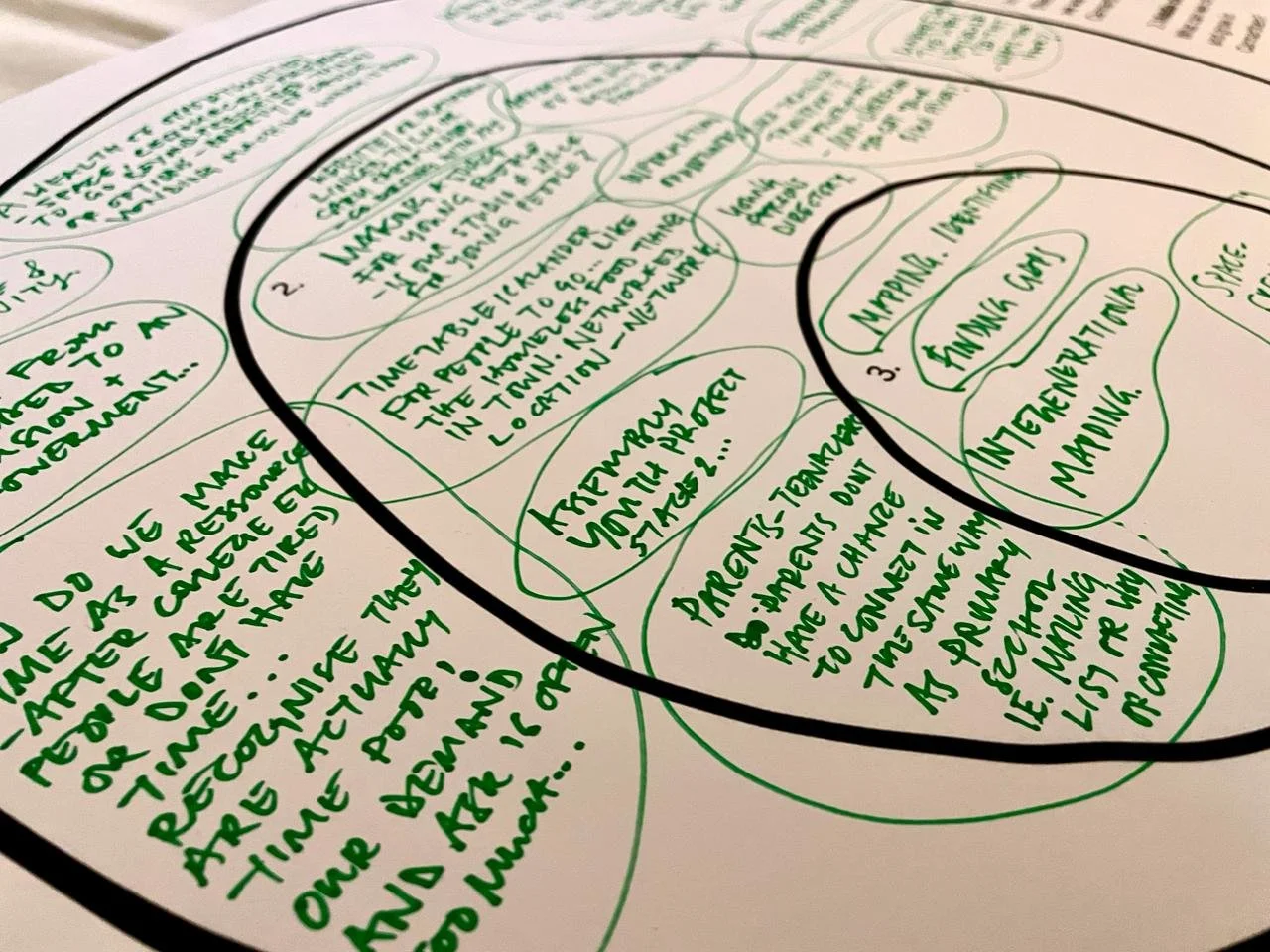
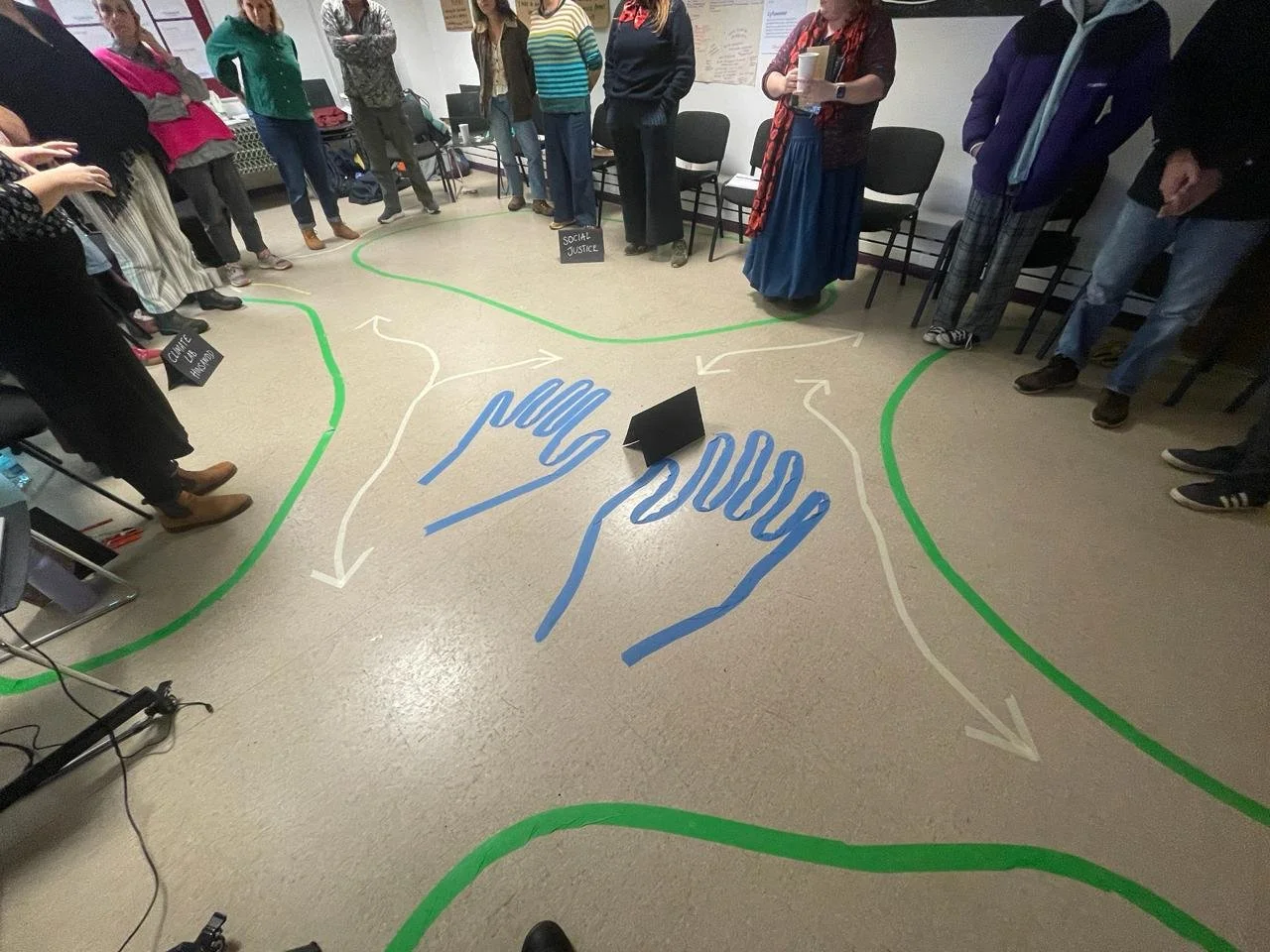
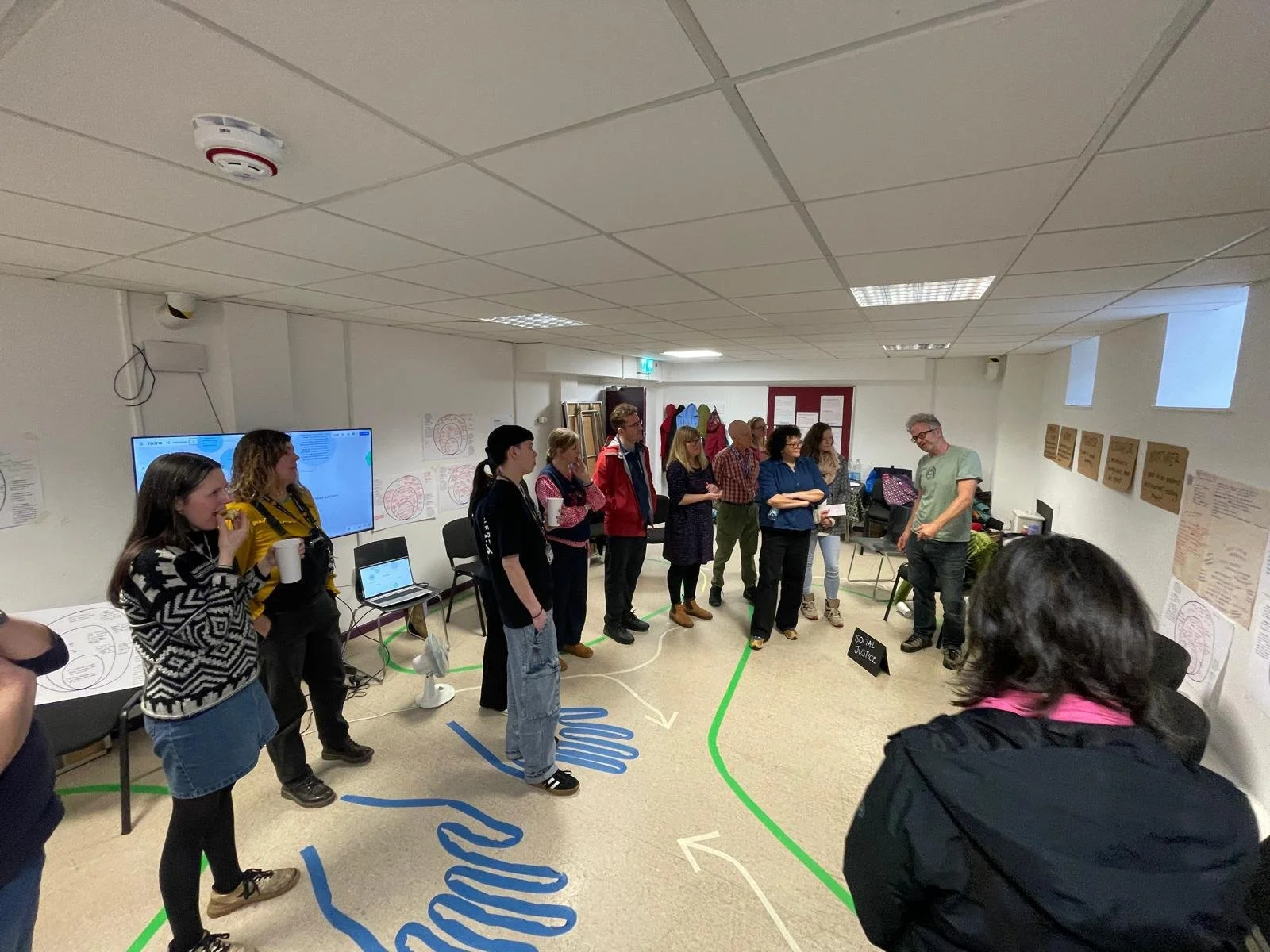
We created a very simple version of the garden this time using tape, based on the graphic of the garden plan that came from Compostïo 1. The four main zones of the garden were, Climate Lab, Social Justice, Anti Poverty and Young People. We also had Compost (a space for evaluation and stories / lived experiences) and Training (a publicly accessible training and themed training specific to different garden zones). We used the three spheres of influence model to capture the following in relation to each garden zone
Outer circle:
In relation to this theme what change do we want to see in Carmarthen?
Middle circle:
What can we create and grow in Carmarthen?
Inner circle:
In this zone, how could we work together in service of the change we want to see? What do we have available to us? (people, assets etc) and who are we called to be?
This iterative process meant a layering of information and feedback. Each group also saw what the previous group had left as notes and ideas, and continued to build off of them.
People also had the chance to plant a sunflower and add their training needs to list of growing.

COMPOSTÏO Session 3
This was the final session (for now) of the Compostïo process. By this time we had established our zones of interest - or plots within the larger garden, which were defined throughout the process by the participants. In this session we talked about how we make decisions, how we allocate budgets and explore ways of working towards consensus. It's one thing to do this on paper and it's another thing to do it in person, so we practiced and were led by Lisa, Jen, Ali and Owen in trying out different ways of working and different scales of ideas. Rehearsing, tuning and following a guide made sure everyone plays a role, and all voices are equal.
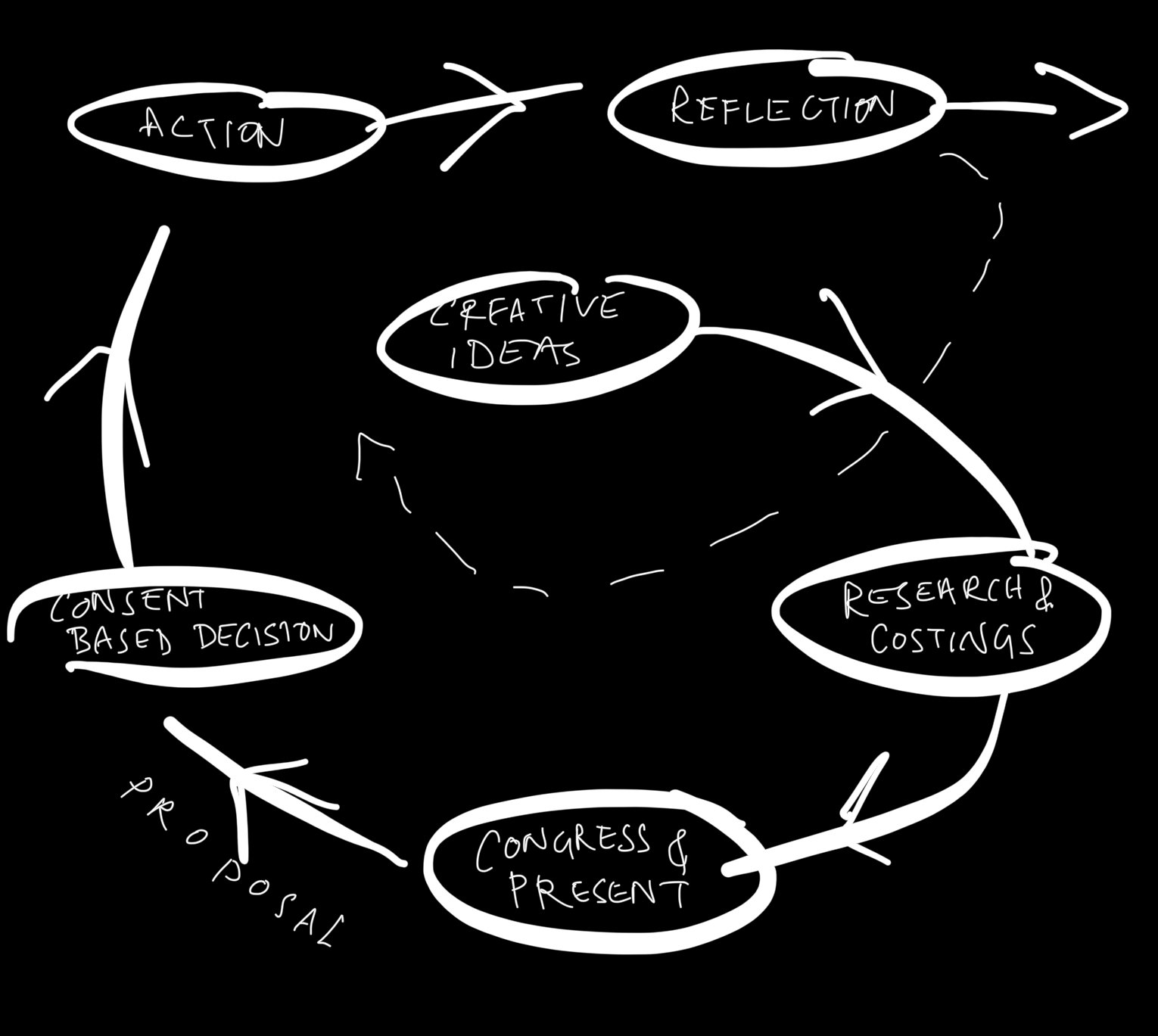
We looked at sociocracy to explore consensus-based decision making and Deep Democracy as a tool to resolve or understands difference. What emerged was a final pathway or map to enable all the working groups to decide on how to work and what allocation of resources and budget each idea needs and how we can ensure everyone is happy to back, add an initiative and support these ideas going forward.
The Pollination Pathway...
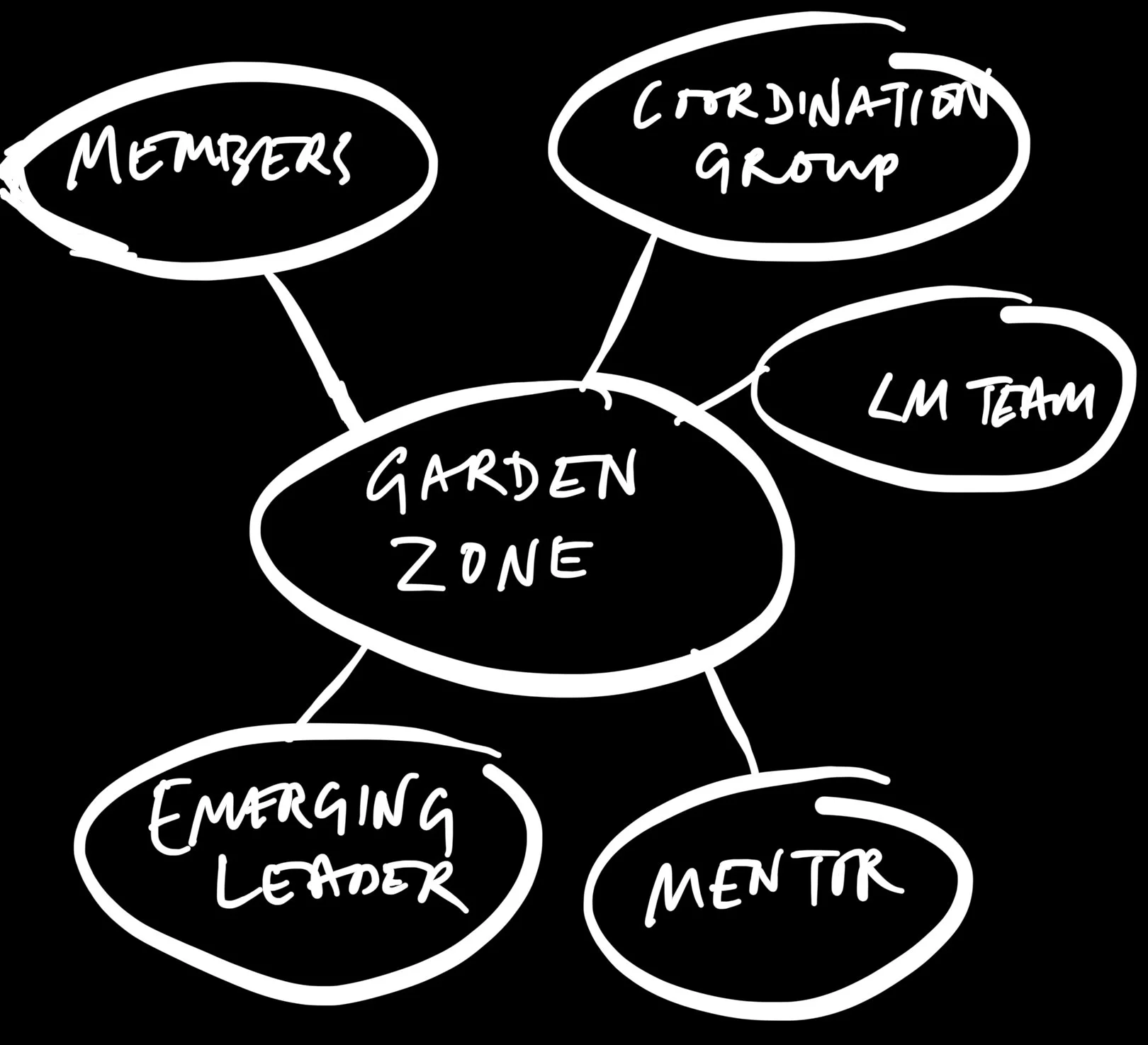
This codesigned model of how to work together emerged from Compostïo 3.
These steps offer a process which centers the voices in the room, creativity and democracy, which leads to action and momentum.
However, we can cycle back into the spiral to deepen our understanding or start anew.